


 Français
 Русский
 Español
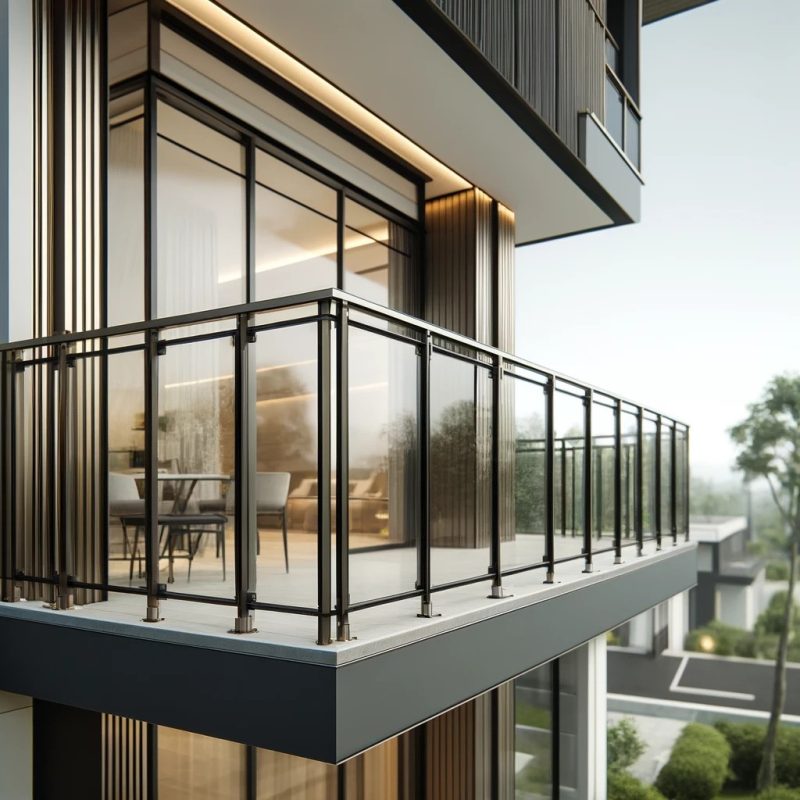
Glass railing height is a safety-critical dimension set by building codes, and it varies by jurisdiction and application. A guard that is too low allows falls from elevated floors, balconies, and stairs, so code minimums exist to keep occupants and property safe. Getting the height right also drives the rest of your railing hardware — post spacing, glass thickness, and clamp load all depend on it.
This guide explains common glass railing height requirements and how they affect hardware selection.
Common Minimum Heights
- US commercial / multi-family (IBC 1015) — guards must be at least 42 in (about 1070 mm).
- US residential (IRC R312) — guards at least 36 in (about 914 mm); on open sides of stairs, at least 34 in measured vertically from the stair nosing.
- ASTM E2358 — the referenced standard for glass railing systems; height not less than the code minimum for the application.
- Hong Kong — protective barriers at least 1.1 m in most circumstances.
- Dubai — balcony balustrades and terrace railings not less than 1200 mm.
- China (GB 55031) — balcony, corridor, and atrium railings not less than 1.10 m.
Always confirm the exact minimum with your local building official, since states, provinces, and municipalities often adopt stricter values.
How Height Is Measured
Guard height is measured vertically from the finished floor (or the stair nosing) to the top of the handrail. If there is a climbable surface — a horizontal or near-horizontal plane at least about 0.22 m deep and no more than about 0.45 m high — the height is measured from the top of that climbable surface instead. This prevents the guard being defeated by something that can be stepped on.
Glass and Hardware for Compliant Railings
- Safety glazing — use toughened or laminated glass as required by the applicable code and ASTM E2358.
- Post spacing — taller guards and larger spans increase the load each post and clamp carries.
- Base fixing — surface-mounted or spigot bases must be rated for the guard height and imposed loads.
- Handrail — a handrail on top is required at stairs and often on guards; it transfers grip loads into the system.
Frequently Asked Questions
What is the minimum height for a glass railing?
It depends on the code and application — commonly 42 in (about 1070 mm) for US commercial/multi-family (IBC 1015) and 36 in (about 914 mm) for US residential (IRC R312). Always confirm with the local building authority.
Does railing height affect hardware choice?
Yes. A taller guard and wider post spacing increase the load each post, clamp, and base must carry, so the hardware rating must match the required height and span.
What glass is required for a glass railing?
Safety glazing — toughened or laminated glass as required by the applicable code and ASTM E2358. If one glass infill fails, the guard must remain in place and resist the specified loads.
Hardware Rated for the Right Height
Because finished guard height is measured to the top of the handrail, our glass railing handrail installation guide covers correct bracket and standoff placement at that elevation.
Trilonum supplies railing and balustrade hardware including glass railing clamps and railing posts, in 304 and 316 stainless. Contact us for hardware matched to your railing height and span.
For a side-by-side view, read our full glass balustrade vs metal railing comparison covering views, load path and maintenance.
Once heights are confirmed, our glass balustrade measuring guide covers run lengths, post spacing and panel tolerances.
