


 Français
 Русский
 Español
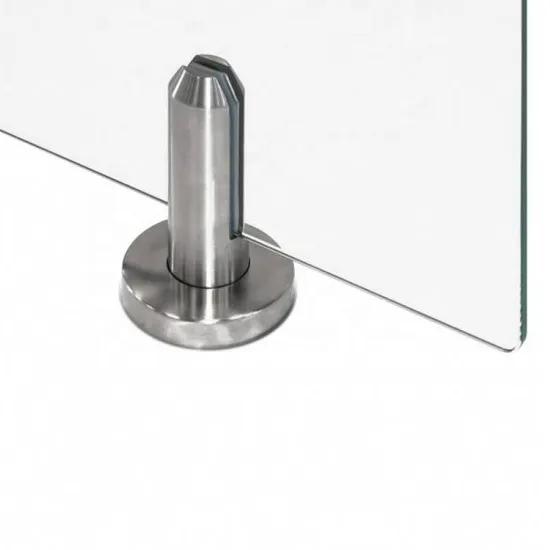
Glass railing hardware maintenance keeps posts, clamps, spigots, standoffs, U-channels and fasteners safe and good-looking for years. Stainless steel does not need painting, but it needs regular attention: salt, pool chemicals, industrial fallout and loose fixings cause early corrosion and loose panels. This guide walks contractors and facilities teams through a realistic care routine; limits follow the supplier’s manual and applicable standard.
A frameless glass run depends on a few wearing parts: base spigots and standoffs, edge clamps, U-shaped base channels, handrail brackets, anchor bolts and set screws, plus the gaskets and silicone separating glass from metal. Most fail slowly, so a scheduled inspection catches the problem while it is cheap to fix. If you also manage the building facade, our guide to glass curtain wall maintenance covers the different fixings used there.
Cleaning Frequency and the Right Cleaners
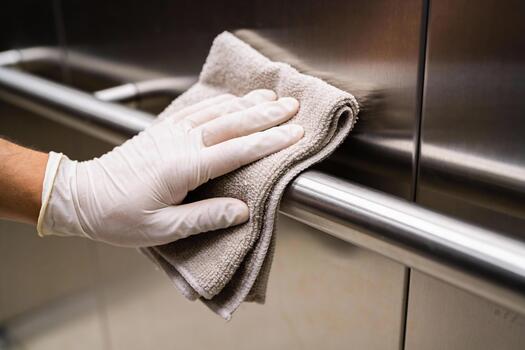
Undercover indoor runs need only light dusting, while exterior balconies, terraces and poolside fences need rinsing more often because salt, dust and residue trap moisture against the metal. A practical baseline is a regular fresh-water rinse with a soft cloth and mild, pH-neutral detergent, wiped dry so water does not stain the stainless. The interval follows the environment and the supplier’s care sheet rather than a fixed number of days.
What to avoid: chlorine and bleach cleaners, abrasive scouring pads, steel wool, wire brushes, and strongly acidic or alkaline products that attack the chromium oxide film. These are the most common cause of self-inflicted staining. Wipe along the grain, rinse detergent off fully, and keep masonry grit off the metal.
Environmental Risk: Coastal Salt, Pool Chlorine and Industrial Air
Stainless 304 handles most inland, sheltered projects; 316 is the usual choice where salt spray, pool chemicals or industrial pollution reaches the hardware. Near the coast, salt-laden air settles into crevices around screw heads, channel bottoms and standoff collars, holding moisture against the metal. Around pools, chlorine-laden splash-back collects on the same hidden surfaces, so pool fence hardware needs more frequent rinsing; see our guide to pool glass fence hardware to Australian standards for grade expectations in that environment.
Industrial sites add soot, acid rain fallout and airborne dust that should be washed off rather than left to cake. The grade chosen at specification cannot be upgraded later, so recurring staining should prompt a grade review with the supplier rather than treating the surface alone.
Early Rust and Pitting: Spot It Early and Act
“Stainless” stains rather than fails wholesale. First signs are brown-orange speckles, a dull patch on a polished surface, or a tea-coloured streak from a screw or clamp, usually at a damp, trapped-moisture spot. Light surface rust from contamination can often be removed with a dedicated stainless cleaner and soft pad; deep pitting, where craters have formed in the metal, cannot be polished away and weakens the section.
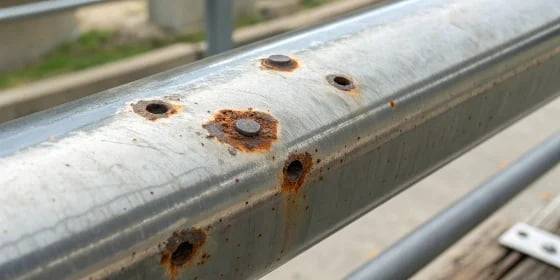
Check hidden spots first: under a clamp gasket, inside the U-channel, behind a standoff collar, and around anchor plates where water pools. Treat early staining promptly, photograph it, and contact the supplier if it returns; recurring pitting usually means the grade is wrong or moisture is trapped where it should drain.
Fastener Checks and Torque Re-Tightening
Vibration, thermal movement and settlement can loosen set screws, clamp bolts and anchor fixings over time. On each inspection, check that panels have no movement in their clamps, that standoff collars sit flush, and that anchor plates show no lifting. Re-torque only with a calibrated tool and the supplier’s specified value; never estimate from feel, because over-torquing can stress the glass while under-torquing leaves the panel loose. Our glass railing handrail installation guide explains the same torque-first sequence used on site.
Replace any fixing with stripped threads, a damaged head, or a bolt that will not hold torque rather than forcing it. Match new spigots, clamps and bolts to the original specification, since suppliers differ in length, thread and clamping pressure.
Moving Parts, Seals and Gaskets
Adjustable brackets, gate hinges and sliding hardware benefit from occasional supplier-recommended lubricant; keep it off the glass and contact surfaces. Gaskets, neoprene collars and setting pads age, crack and compress under UV exposure. Look for split collars, hardened pads, or a gap where glass touches metal directly; that contact point is where stress cracks and trapped moisture begin. Keep channel silicone seals continuous and repair cracked seal before water reaches the anchorage.
When to Contact the Supplier for Replacement Parts
Ask the supplier for replacement rather than improvising when pitting is deep and spreading, an anchor lifts or spins in the substrate, a bolt will not reach the specified torque, gaskets cannot be matched, or the hardware was fitted in an environment its grade was not chosen for. Matching replacement spigots, clamps or standoffs keeps the load path consistent, and any grade change should be confirmed against the site environment.
Need a maintenance kit or replacement fixings? Explore our railing & balustrade hardware range, or send us photos and we will match parts to the original system.
Quarterly and Annual Maintenance Checklist
| Check | Quarterly (or after heavy weather at coastal and pool sites) | Annual |
|---|---|---|
| Cleaning | Rinse and wipe hardware with fresh water and mild neutral detergent; dry the surface | Deep-clean channel interiors and hidden crevices |
| Corrosion check | Inspect collars, standoffs and channel edges for brown speckles or dull patches | Photograph and log condition; escalate recurring staining to the supplier |
| Fixings | Check panels for movement; note loose set screws or lifted anchor plates | Re-torque fixings to supplier values with a calibrated tool; record values |
| Seals and gaskets | Confirm pads sit between glass and metal with no direct contact | Lubricate moving parts; check seals and replace cracked sections |
Glass Railing Hardware Maintenance FAQ
How often should glass railing hardware be cleaned? It depends on the environment: indoor runs need only light dusting, while coastal and poolside hardware needs more frequent rinsing to remove salt and chlorine. Follow the supplier’s care sheet, not a fixed schedule.
Can I use bleach or chlorine cleaner on stainless railing hardware? No. Chlorine cleaners break down the protective chromium oxide film and cause pitting. Use a mild, pH-neutral detergent with fresh water and a soft cloth, then rinse thoroughly.
What is the difference between surface rust and pitting? Surface staining sits on top and can often be cleaned; pitting forms craters in the metal, cannot be polished out, and weakens the part, so it should be assessed by the supplier.
Should I re-tighten the bolts myself? You may check for looseness, but re-torquing must use the supplier’s specified value with a calibrated wrench. Never estimate torque: over-tightening can damage glass, under-tightening leaves the panel loose.
Why is my 304 hardware rusting near the coast or the pool? 304 suits inland sheltered use; aggressive salt or chlorine environments usually need 316 grade. If staining returns after cleaning, ask the supplier to review the grade.
When should gaskets and collars be replaced? Replace gaskets, neoprene collars and setting pads when cracked, hardened, compressed or missing. Glass must never touch metal directly, because that concentrates stress and traps moisture.
Keep your next run maintainable from day one. Contact Trilonum with your drawings for a hardware schedule matched to the site environment, including stainless grade, fixings and spares.
