 Français
 Русский
 Español
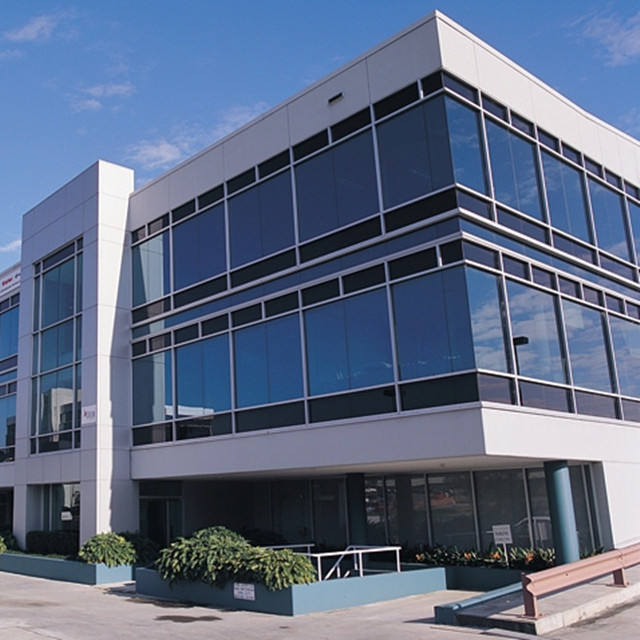
The curtain wall industry in 2026 is being reshaped by six forces: solar-integrated facades, unitised construction, stricter fire rules, embodied-carbon accountability, energy-efficient glazing, and smart facades. For specifiers and hardware buyers, these trends are not abstract — they change what gets specified, how it is engineered, and which hardware earns the order.
Here is what is actually moving the market this year, and what it means for curtain wall hardware.
Trend 1: Building-Integrated Photovoltaics (BIPV) Go Mainstream
Facades are becoming power generators. Semi-transparent and photovoltaic glass is increasingly embedded in curtain walls, turning building skins into energy surfaces that offset a meaningful share of building load. Perovskite-silicon tandem cells are pushing module efficiency beyond 33% in the lab, and BIPV glass is now a specification option rather than a prototype in many regions.
Trend 2: Unitised Curtain Walling for Speed
Unitised (modular) curtain wall systems — large factory-fabricated panels assembled on site — continue to displace stick-built construction on high-rise projects. They cut on-site labour, shorten schedules, and improve quality control. For hardware, this means components must suit modular panel assembly and repeatable tolerances.
Trend 3: Stricter Fire Performance Rules
Fire safety is tightening globally. The EU Construction Products Regulation (CPR) amendment effective January 2026 requires A2-s1,d0 fire classification for facade materials on buildings above 11 metres across member states, with parallel mandates in the UK (Part B), Australia (NCC 2025), and the UAE. Specifiers are under pressure to document the fire performance of every facade component.
Trend 4: Embodied Carbon and EPDs Become Deal-Breakers
Sustainability has moved from marketing to procurement. Environmental Product Declarations (EPDs) under EN 15804+A2 and ISO 14025 are now routinely required, and recycled content is climbing — recycled aluminium content in curtain wall framing reached roughly 31% in 2026. Buyers increasingly ask for verified carbon data on profiles, coatings, and hardware. Low-impact materials such as recycled aluminium and bio-based sealants are shifting from niche to standard.
Trend 5: Energy Efficiency Through Glazing, Not Frames
Energy codes in North America and Western Europe are raising U-value and solar-heat-gain requirements, driving triple-glazed and vacuum-insulated glass units — now specified in roughly 35% of new tenders in some regions. Thermally broken aluminium framing with low-emissivity glazing is the default. The architectural payoff is lower operating cost; the hardware implication is that glass weight and panel sizes grow, demanding robust fittings.
Trend 6: Smart and Responsive Facades
IoT-enabled sensors, dynamic shading, and automated control are entering facade systems for real-time environmental monitoring. While still maturing, these features are appearing in premium commercial projects and are influencing how facade hardware is specified and maintained.
What These Trends Mean for Curtain Wall Hardware
- Heavier, larger glazing demands higher-load spider fittings, routel bolts, and tension rods engineered for deflection.
- Unitised assembly rewards hardware with repeatable tolerances and easy modular fit.
- Fire and EPD documentation is becoming a selection criterion — buyers want suppliers who can show material grades and certification.
- Corrosion performance matters more as coastal and high-exposure projects grow; 316 stainless is increasingly specified over 304.
These trends favour specifiers who plan hardware early and buy from manufacturers who can document material grade, load data, and delivery reliability. Explore Trilonum’s point-supported curtain wall hardware or contact us for project support.
For the wider year-by-year outlook beyond these market forces, our 2026 facade trends roundup adds emerging material, BIPV and regulatory shifts.
Frequently Asked Questions
What is the biggest trend in curtain walls in 2026?
BIPV integration (facades that generate solar power) is the most visible trend, alongside stricter fire-performance rules and embodied-carbon/EPD requirements that are now standard in procurement.
Are unitised curtain walls replacing stick-built systems?
Unitised systems are growing fast on high-rise projects because they are faster and more quality-controlled, but stick-built remains common on smaller and custom projects. The two coexist by project scale.
Why do fire regulations matter for facade hardware?
New rules such as the EU CPR A2-s1,d0 requirement for facades above 11m mean every component — including hardware and fixings — must be documented for fire performance and material compliance. This affects which products are accepted.
Should I specify 304 or 316 stainless steel hardware?
304 is sufficient for interior and low-corrosion environments. 316 is recommended for coastal, poolside, and industrial exposure, and is increasingly specified as premium projects grow. Hardware material is a major cost factor in facade budgets.
Plan Your 2026 Facade with the Right Hardware
To map these 2026 trends to a concrete system choice, our structural glazing systems guide reviews the main structural glazing options.
Trends drive specification, but hardware executes it. Talk to Trilonum about spider fittings, tension rods, and connection hardware for your next curtain wall project — specified for load, corrosion, and compliance.
