


 Français
 Русский
 Español
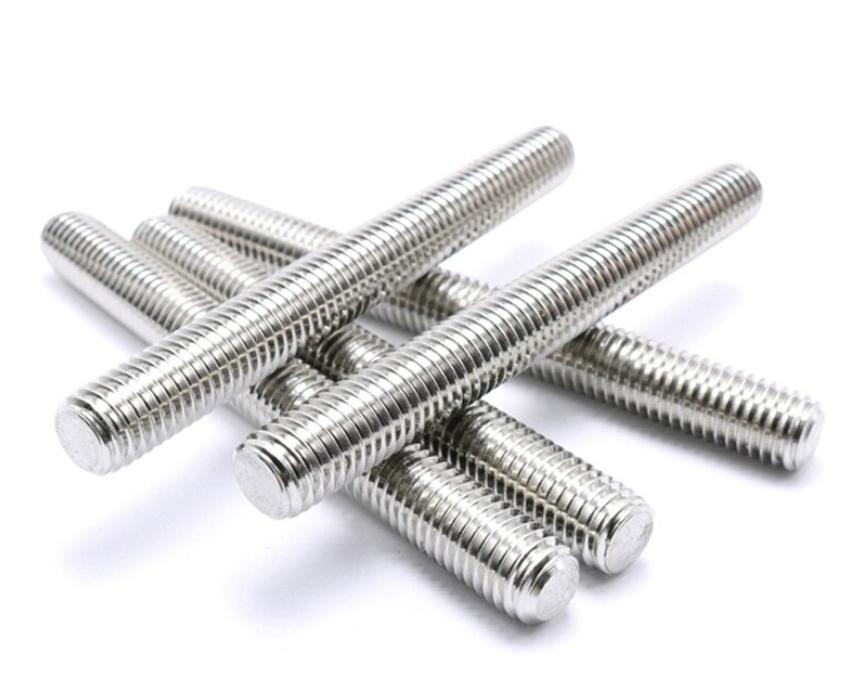
The threaded rod vs stud question comes up constantly on a curtain wall fixing schedule. Both look like threaded steel and take hex nuts, yet they serve different jobs: one hangs and tensions, the other anchors and clamps. Mixing them up leads to wrong lengths, mismatched nuts, and a fixing loaded as it was never sized for. This guide compares the two for hardware specifiers.
In short: a threaded rod (all-thread or hanger rod) is a straight bar threaded along its whole length and cut to size on site; a stud bolt is a shorter, pre-cut piece threaded at one or both ends, often with a plain centre section, used to join two plates with nuts either side. Our bolts, anchors & brackets range covers both; threaded rods on curtain walls covers the suspension side.
What a Threaded Rod Is
A threaded rod is a long steel bar with a continuous thread from end to end, stocked in standard lengths (commonly 1 or 2 metres) and cut to size on site. Because the thread runs the full length, a nut can sit anywhere along the bar, making length adjustable on site: slide the nut until the gap, height or pre-load is right, then lock it off.
On a curtain wall, rods appear as hangers for sunshades and canopy trim, vertical suspension ties from floor or soffit, and horizontal tension members in point-supported and spider-type facades. Their natural load case is axial tension; they are not meant to carry significant shear across the bar.
What a Stud (Stud Bolt) Is
A stud bolt is a shorter, fixed-length piece threaded only at the ends. A double-ended stud has thread at each tip and a plain shoulder in the middle; a single-ended stud threads at one end while the other is plain or welded in place. The shoulder sets the engineered engagement depth; the stud arrives pre-cut to a defined length.
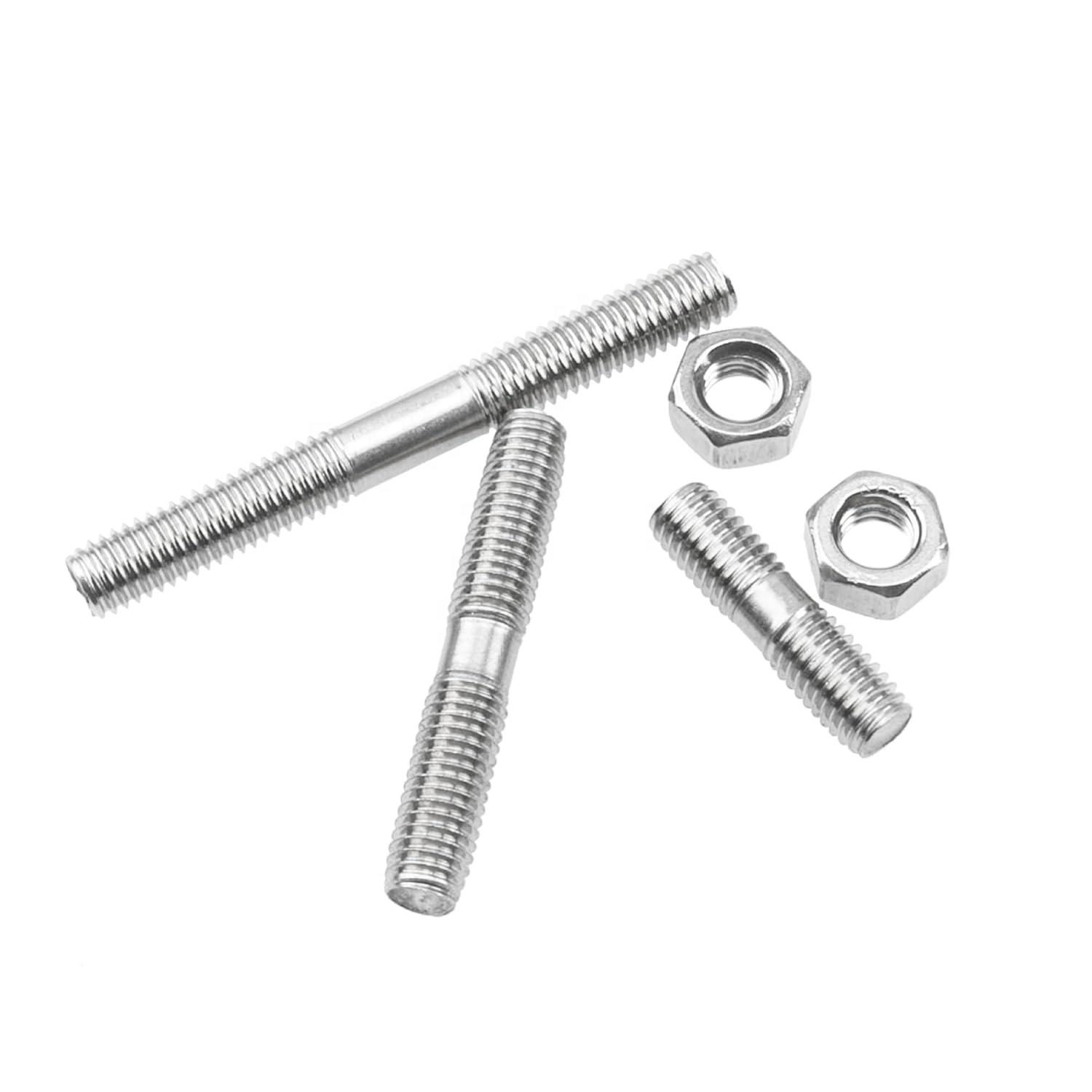
In curtain wall connections, studs clamp brackets, cleats, ear plates and spider fittings to a steel subframe or embedded plate: the stud passes through both parts, and outside nuts lock the joint. The load is mainly shear plus clamping force; the stud joins two members side by side rather than hanging from above.
Threaded Rod vs Stud: Side-by-Side Comparison
| Criteria | Threaded Rod (All-Thread / Hanger Rod) | Stud / Stud Bolt |
|---|---|---|
| Thread coverage | Continuous thread full length | Threaded at ends; plain centre shoulder |
| Length supply | Long stock bars, cut on site | Pre-cut to a fixed length |
| Primary job | Suspension, hanging, bracing | Clamping plates and brackets |
| Main load case | Axial tension between two points | Shear plus clamping compression |
| Adjustability | High; nut slides anywhere on thread | Limited; engagement depth fixed |
| Curtain wall role | Hangers, tension ties | Bracket and cleat fixings |
Load Direction: Tension vs Shear
The most important difference is how each part carries force. A threaded rod is pulled: gravity on a suspended canopy, wind suction on a tension brace, or pre-load from a turnbuckle, with force running along the centreline into the end nuts and anchor points. A stud holds parts together; the facade load tries to slide one plate past the other, and the stud resists that crosswise force in shear.
This is why a rod loaded sideways, or a stud hung as a tension link, is a specification error rather than a shortfall of size. Where the member is pulled, specify a rod; where a joint is clamped, specify a stud. Sizing, grade and force come from supplier data and the applicable standard (such as ISO 898), not a rule of thumb.
Nuts, Washers and Assembly
The two parts need different accessory sets. Rods rely on nuts at both ends of a tension link: a hex nut to develop the load, a lock or jam nut to prevent movement, and a washer to spread pressure; turnbuckles may set pre-load without changing rod length.
Studs take a nut at the exposed end with a flat washer under it; where loosening is a risk, a spring washer or lock nut is added. In both cases, torque, engagement depth and washer type follow the supplier’s specification; never estimate by feel.
Review the full fixing set with our guide to curtain wall fixing anchors, which covers the ground and soffit anchors these rods and studs connect to.
Material and Corrosion: 304 vs 316
Both rods and studs are normally stainless steel. Grade 304 covers most inland and sheltered projects; grade 316 (with added molybdenum) suits coastal, pool-side, road-salt and aggressive environments. A tension rod exposed to rain runs continuously, so crevice corrosion at the thread matters.
How the fixing lands in concrete, block or steel — expansion vs chemical — decides how force transfers; our comparison of expansion vs chemical anchors walks through that choice. Properties and corrosion class come from the supplier’s certificate and relevant standard.
Sourcing, Length and Tolerances
Procurement handles the two items differently. Rods are bought by bar length and cut on site, so one stock size covers many positions. Studs are bought per finished length, threaded-end engagement and grade, because cutting a stud shorter removes the engineered thread. Specify overall length, threaded-end length per side, thread standard, grade and washer set together.
When to Specify Which
- Specify a threaded rod when the member hangs a load, braces a facade in tension, or needs on-site length adjustment between two anchor points — sunshade hangers, vertical ties, spider bracing.
- Specify a stud bolt when plates, brackets, cleats or ear plates are clamped in a shear joint, with length fixed by the detail.
- Do not substitute a cut all-thread bar for an engineered stud; the shoulder and engagement depth are part of the design.
- Match grade and accessories to the exposure and load case, verifying against supplier data and the standard.
Threaded Rod vs Stud FAQ
Can a threaded rod be used as a stud? A cut all-thread bar can clamp a simple joint in low-demand cases, but it lacks the engineered stud’s plain shoulder and fixed engagement. Where shear load matters, use the specified stud.
Which one carries tension? Threaded rods are designed for axial tension; they hang and brace. Studs carry shear and clamping force rather than acting as tension members.
Do both need nuts? Yes. Rods need a nut at each end of the tension link, often with a lock nut; studs need a nut at the exposed end with washers and a lock device where loosening is possible.
304 or 316 for a curtain wall? 304 suits most inland and sheltered exteriors; 316 suits coastal, pool-side, road-salt and aggressive environments. Confirm grade with the supplier against the project location.
Can I cut a stud shorter on site? No. Cutting removes the engineered threaded end and changes engagement depth; order studs at the specified finished length.
Where do load capacities come from? Tensile and shear values, torque and engagement come from supplier engineering data and the applicable standard (such as ISO 898), never an estimate.
Unsure whether a connection calls for a rod or a stud? Send the drawings to Trilonum and we will size tension links, bracket studs, nuts and washers as one package — request a quotation from our team.
