


 Français
 Русский
 Español
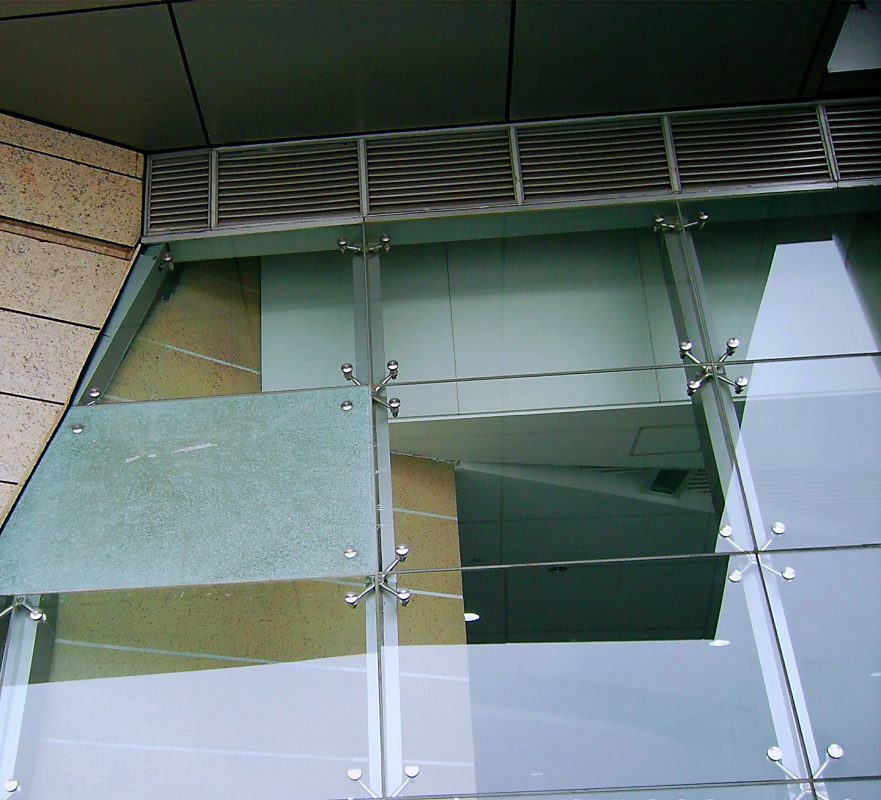
The routel bolt vs standard fixing decision decides whether a point-supported glass facade can be aligned on site or drilled to an exact, unforgiving template. Routel bolts — also called articulated, rosette or point-fixing bolts — are engineered for glass; standard bolts, screws and anchors are general-purpose fasteners for metal-to-metal and substrate joints. This guide compares both for specifiers sizing hardware for a curtain wall or atrium.
In short: a routel bolt passes through a drilled glass hole and swivels to meet the spider arm or tension rod at the correct angle, with gaskets separating metal from glass. A standard fixing locks parts together on a fixed axis with no angle compensation. The right choice follows the load case, substrate and available tolerance — not unit price alone. Browse our point-supported systems range and the overview of point-fixed glass curtain walls.
What a Routel Bolt Is and How It Works
A routel bolt passes through a drilled hole in a toughened glass panel and connects it to a spider fitting, tension rod or cable bracing. Its visible end uses a rosette disc that spreads clamping force over a larger area, while an elastomeric gasket sits between every metal surface and the glass so steel never bears directly on it. An articulated ball-joint shank swivels within its range, meeting the spider arm at the intended angle without forcing the glass out of plane.
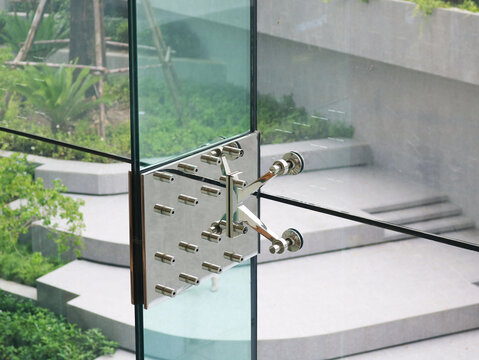
That articulated joint separates a routel bolt from a plain bolt: it absorbs misalignments between the subframe, fabricated panels and finished glass line, and carries combined tension and shear where the panel transfers wind load to the support system. Hole size, edge distance, articulation range and tightening value follow the supplier’s engineering data or ETA report, never a site estimate. For sizing background, see our guide to spider fitting dimensions and load capacity.
What Standard Fixings Are
Standard fixings are the general-purpose fasteners of every trade: hex bolts, machine screws, self-drilling screws, expansion anchors and chemical anchors. They join steel to steel, steel to concrete, timber to substrate, or attach trims on a fixed, rigid axis. There is no swivel, no glass isolation pad, and no movement perpendicular to the bolt line.
Used correctly, they are inexpensive, widely available and well documented. Used incorrectly at a glass point, a standard fixing creates a hard metal edge against brittle glass, cannot compensate for misalignment, and concentrates stress around the hole instead of spreading it.
Routel Bolt vs Standard Fixing: Side-by-Side Comparison
| Criteria | Routel Bolt (Articulated Point Fixing) | Standard Fixing (Bolt / Screw / Anchor) |
|---|---|---|
| Primary use | Drilled glass to spiders, rods or cables | Metal-to-metal and substrate joints |
| Angle adjustment | Swivels within the manufacturer’s range | Fixed rigid axis; no freedom |
| Glass contact | Rosette discs with gaskets isolate metal | None; direct metal contact |
| Load case | Combined tension and shear at the point | Shear; tension per anchor data |
| Tolerance | Compensates frame and panel misalignment | None; holes must match exactly |
| Material | Machined 304 / 316 stainless steel | Carbon steel, zinc-plated or generic stainless |
| Unit cost | Higher per piece | Lower per piece |
| Sizing reference | Supplier data, ETA or test report | Fastener tables, anchor data |
When to Specify Routel Bolts
Specify a routel bolt wherever a glass panel is held at discrete points and the connection must align after fabrication:
- Point-supported curtain walls around spider fittings, where each panel meets the subframe at corners or edges.
- Tension rod and cable bracing, where the rod line rarely arrives parallel to the glass plane and the joint must angle into position.
- Faceted or non-flat facades, where panels sit on different planes and a rigid fixing cannot follow the geometry.
- Combined tension-and-shear cases at a drilled hole, such as atrium glazing and canopies exposed to wind suction and pressure.
- Tolerance compensation between the support structure, fixing pattern and finished glass line.
Routel bolts are the visible connection in most transparent spider facades; for the broader system choice, our comparison of glass fin vs spider systems explains how panels, fins and point fixings combine.
When Standard Fixings Are the Right Choice
Standard fixings remain the correct spec for most connections in a conventional build-up:
- Subframe to structure: bolting posts and transoms to concrete, steel or anchor channels.
- Metal-to-metal joints: brackets, ear plates, handrail posts and trims that never contact glass.
- Budget-driven interior work: partitions, door hardware and fixings to timber or thin substrates.
- Conventional framed curtain walls, where glass sits in gaskets or channels instead of being drilled.
- Simple shear joints on a machined steel interface, covered by standard bolt tables.
Compare the point-supported hardware range — routel bolts, spiders and rod fittings — or ask our team to match the fixing family to each joint on your drawings.
Structure, Installation and Tolerances
On site, sequence matters. Establish the support frame and check the fixing pattern before panels are lifted; bed each routel with its front and rear gaskets; leave the joint loose during dry alignment; then tighten in the supplier’s sequence once the panel is plumb and the angle sits correctly. Final torque comes from the product data — over-tightening crushes the gasket or stresses the hole; under-tightening leaves the panel loose under wind load.
Hole position and edge distance are set by the glass processor and hardware supplier together, because toughened glass cannot be drilled after tempering. Standard fixings allow more freedom: anchors set where the drill finds solid substrate, brackets shimmed into position. Confirm grade — 304 inland, 316 for coastal, pool and aggressive locations.
Cost and Procurement Notes
A routel bolt costs more per piece, but it replaces rework: misaligned glass, re-drilled steel and cracked panels usually cost far more than the fitting premium. Request load data, ETA or test report, grade certification and finish for every routel line, and never substitute a standard bolt through a glass hole — the gasket spread, swivel and hole detail do structural work, not decoration.
Routel Bolt vs Standard Fixing FAQ
What is the difference between a routel bolt and a standard bolt? A routel bolt is an articulated, gasket-isolated point fixing that passes through a drilled glass hole and swivels into alignment with a spider or rod. A standard bolt is a rigid fastener for metal-to-metal or substrate joints with no angle compensation and no glass isolation.
Can I use a standard stainless bolt through a glass hole? Not as a routel replacement. The rosette spread, gaskets and articulation protect the glass and align the joint; a plain bolt concentrates stress and offers no tolerance movement. Size the connection from supplier data.
Are routel bolts adjustable after installation? Within the manufacturer’s range, the joint allows fine alignment before final torque. Once tightened, major corrections mean dismantling and re-setting — check alignment during the dry fit.
Which load cases do routel bolts handle? Combined tension and shear where a drilled panel transfers wind load to spiders, rods or cables. Exact capacity comes from the supplier’s test report or ETA; never quote load values from general tables.
Which stainless grade should I specify? 304 covers most inland, dry projects; 316 suits coastal sites, pools, roofs and aggressive atmospheres. Confirm grade and finish with the supplier.
What documents should I request before ordering? Load data, ETA or test reports, grade certification, gasket material, torque values and hole-edge distance guidance. Standard fixings need anchor data for the substrate; routel lines need the full point-fixing dossier.
Working out which joints take routel bolts and which take standard fixings? Send the facade drawings for a joint-by-joint hardware list — request a quotation from Trilonum.
