 Français
 Русский
 Español
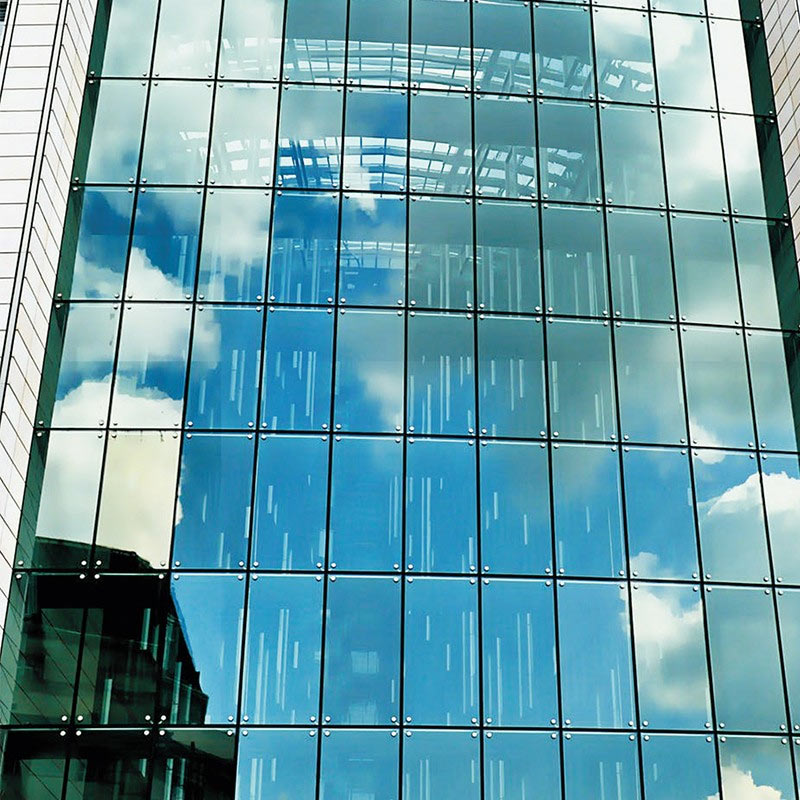
Understanding point supported facade cost means comparing how a spider (point-fixed) glazing system and a unitised curtain wall reach a transparent glass look through fundamentally different spending patterns. Neither system is universally cheaper: the answer depends on glass specification, hardware quantity, site versus factory work, and sourcing route. This guide lays out a cost comparison framework for contractors, engineers and procurement teams without generic square-metre guesses.
A spider system fixes each panel at discrete points through stainless spiders and point fittings, usually braced by a steel frame, tension rods or cables. A unitised curtain wall arrives as factory-built aluminium frames with glass already glazed, hoisted and assembled on site. Our point-supported systems range covers the spiders, clamps and tension hardware in the first route, while the curtain wall systems overview explains how the unitised approach fits among conventional facades.
Where the Money Goes: Cost Components Compared
Every facade budget splits into the same components, but each carries a different weight in a spider system versus a unitised wall. The table below compares the qualitative position of each component rather than quoting fixed prices, because actual figures move with project scale, region and specification.
| Cost Component | Spider / Point-Supported System | Unitised Curtain Wall |
|---|---|---|
| Glass panels | Toughened, often with drilled holes at fixing points; laminated where required | Insulating glass units glazed into frames; holes generally not required |
| Hardware / metalwork | Stainless spiders, point fittings, standoffs, tension rods or cables; unit-cost hardware typically higher than standard fasteners | Aluminium profiles, pressure plates and gaskets; hardware repeats in long standardised runs |
| Support structure | Steel subframe, concrete edge or tension bracing sized to point loads | Factory-assembled modules hung on building anchors and brackets |
| Installation labour | Layout, alignment, point fixing and tensioning done on site; skilled, time-intensive | Modules hoisted and clipped into place; fewer on-site trades, faster erection |
| Design & engineering | Point-load calculations, hole patterns and bracing per panel; high customisation | Modular shop drawings from catalogue systems; lower bespoke engineering |
| Maintenance over life | Visible fittings inspectable individually; gaskets and bolts serviceable | Seals and plates concealed in joints; replacement needs panel access |
The Main Cost Drivers That Separate the Two
Hardware quantity versus unit cost. In a spider system, the fitting count climbs with every panel corner and edge point, and each stainless spider or point fitting costs more per unit than a standard anchor. In a unitised wall, aluminium extrusion repeats across hundreds of modules, so unit cost falls as volume grows. A small feature wall carries a modest fitting count; a large point-supported plane accumulates hardware quickly.
Glass drilling and strengthening. Point fixings require holes drilled through the glass, toughened around those points to manage stress concentration, which adds cost and lead time; drilled panels cannot be reworked if a position moves. Unitised glass is glazed off-site into frames and generally avoids point drilling, shifting that risk to the factory rather than the site.
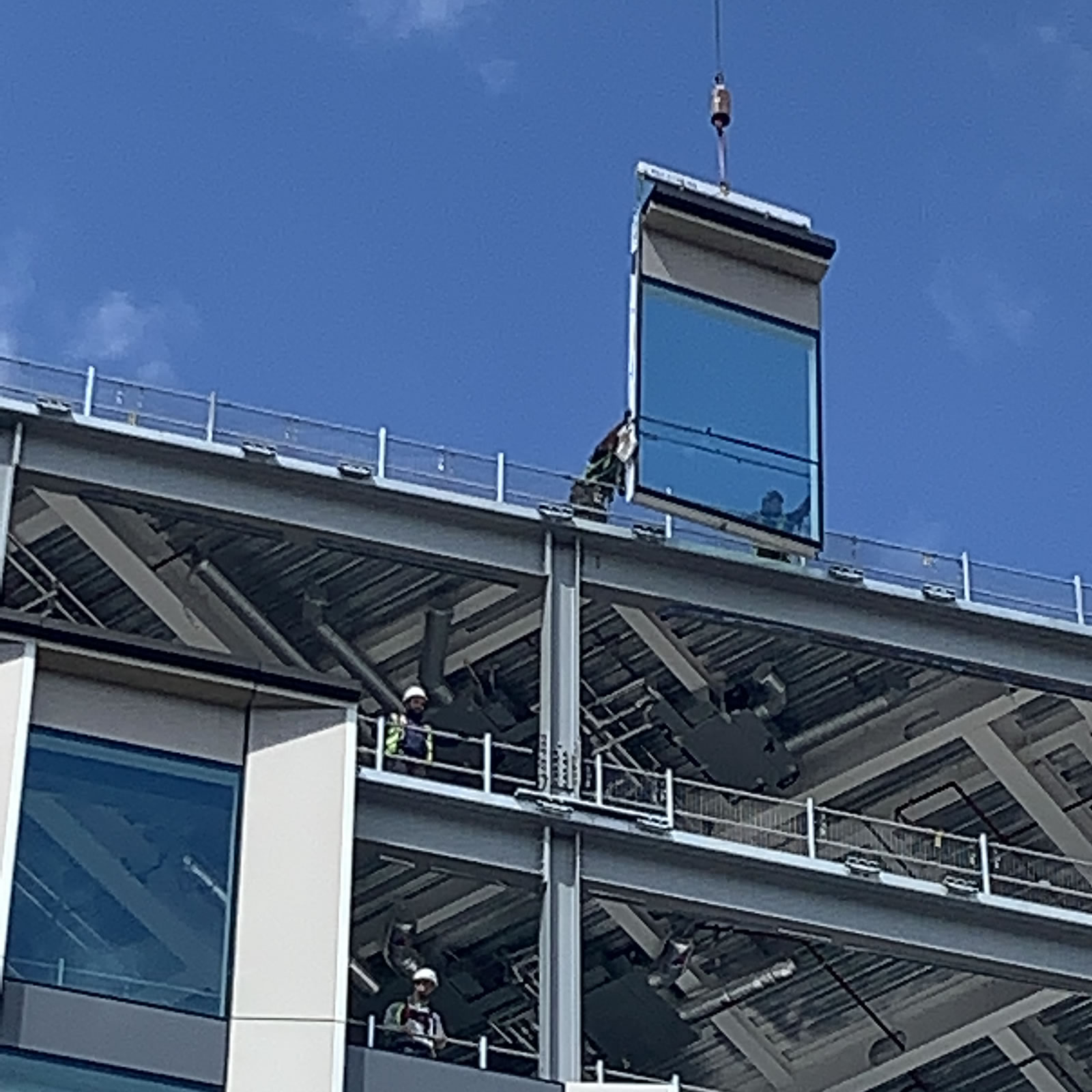
Installation hours and site versus factory work. Spider systems are built on site: every fixing point is marked, aligned, drilled, fitted and tensioned by skilled operatives, so labour hours per unit area tend to run higher. Unitised walls push glass handling, sealing and weatherproofing into a controlled factory, and arrive pre-glazed for fast erection, where repetition lowers defect risk and weather delays matter less. For a visual side-by-side of the transparent options, see our glass fin vs spider system comparison.
Batch Size, Sourcing and Supply Chain
Scale changes relative price in opposite directions. Unitised walls reward repetition: longer, regular facades let the supplier amortise shop drawings, tooling and standard extrusion runs, so module cost improves as the building grows. Spider systems scale less linearly because hardware is specified point by point; adding panels adds more spiders, fittings and bracing rather than repeating a cheap standard module.
Sourcing route also moves the bill. Buying stainless spiders and point fittings directly from a manufacturer rather than a local distributor cuts the middleman markup, especially when quantities are consolidated. Glass usually has to be sourced regionally because it is heavy to ship, but metal fixings are compact, shippable components where direct manufacturer supply delivers the biggest saving.
Before committing to a supplier, review the tension rod and cable hardware options against your bracing layout, and request the fitting schedule direct rather than through a reseller.
Lifecycle Cost: Maintenance, Replacement and Energy
The purchase price is only the first line of a total cost of ownership (TCO) picture. Spider systems expose their fixings, so a failed gasket or loose bolt can be serviced individually without removing a whole panel. Unitised walls hide seals and fasteners inside joints; when a seal fails, access and replacement tend to be more involved, although factory-controlled sealing usually keeps failure rates low over the service life.
Replacement logic differs too. A spider panel can often be swapped at its points while neighbours stay in place; a damaged unitised module may need lifting equipment and adjacent-module coordination. On energy, unitised insulating units typically offer stronger thermal performance because air-sealed double glazing is built into the module, while single-skin point-supported facades rely on separate solar-control specifications. Add cleaning access and gasket inspection to the TCO model before choosing on capital cost alone.
When a Point-Supported System Costs Less
Despite higher per-fitting cost, spider and point-fixed systems can come out ahead in specific project shapes:
A worked commercial example brings the cost logic to life; read our point-supported retail glazing case study for a showroom frontage with real fitting counts.
- Smaller feature walls, atria and entrances. Limited glass area keeps the fitting count modest, so the factory-tooling premium has little volume to spread across.
- Irregular or non-standard geometry. Curved, sloped or mixed planes that force bespoke unitised modules are often cheaper to resolve with point fixings.
- Retrofit over an existing structure. A point-fixed system ties into a steel frame or concrete edge without a full support grid, avoiding upgrades a unitised wall would demand.
- Phased or expandable schemes. Adding panels point by point avoids committing to a full factory module run up front.
Conversely, large, regular, multi-storey elevations favour unitised construction: repetition, fast erection and factory quality control offset the upfront module investment.
Point Supported Facade Cost FAQ
Is a spider system cheaper than a unitised curtain wall? There is no fixed answer. Spider systems carry higher per-fitting hardware and on-site labour; unitised systems carry factory module and tooling cost. Small feature walls and retrofits often favor point fixing; large regular high-rise elevations usually favor unitised erection. Price both routes against your drawings.
Why do point-supported facades cost more in hardware? Each panel is held by individual stainless spiders or point fittings rather than a continuous aluminium frame, and those engineered fixings cost more per unit than standard profiles. The total grows with fixing-point count, so fitting count directly drives hardware spend.
Does drilling holes in the glass add significantly to cost? Yes. Glass must be toughened with accurate hole positions before toughening; drilled panels cannot be altered afterwards, adding processing cost and lead time. Unitised glazing avoids point drilling by sealing glass into frames at the factory.
How does on-site versus factory assembly affect labour cost? Unitised modules are glazed and sealed in a factory and lifted into place on site, reducing skilled on-site hours. Spider systems are fitted and tensioned point by point on site, typically taking more labour per unit area but needing less lifting equipment.
What is the difference in long-term maintenance cost? Spider fixings are visible and serviceable individually; unitised seals and fasteners are concealed inside joints and more involved to reach. Unitised walls usually perform reliably because sealing happens in factory conditions, but servicing a hidden joint costs more than tightening an exposed fitting.
Can I save money sourcing spider hardware directly? Yes. Compact stainless fixings suit direct manufacturer supply, whereas glass is usually sourced locally for shipping reasons. Consolidating the fitting schedule and buying direct typically removes distributor markup without compromising performance.
Pricing a point-supported facade for your project? Send the drawings and panel schedule to our team and we will prepare a direct hardware quotation for spiders, point fittings and tension bracing — contact Trilonum for a costed hardware package.
