


 Français
 Русский
 Español
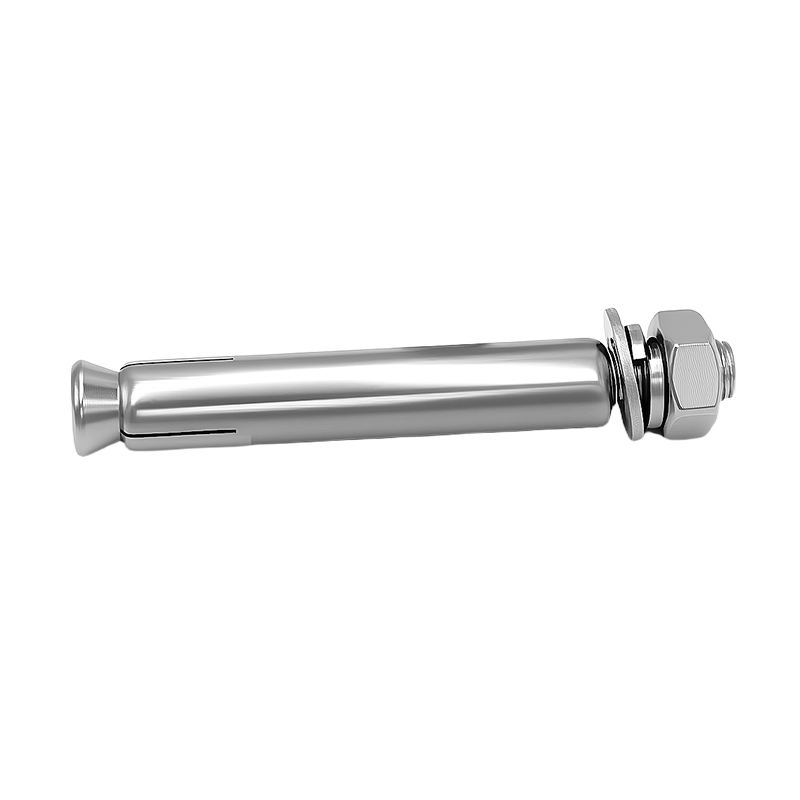
The expansion vs chemical anchor decision comes up on almost every concrete fixing job, from curtain-wall base plates to handrail posts and bracket feet. Both fasten a stud into drilled concrete, but they hold in different ways, and the wrong choice can mean a fixing that slips under load, fails in cracked concrete, or cannot be set at a tight edge distance. This comparison helps specifiers choose mechanical expansion anchors against resin chemical anchors.
In short: expansion anchors grip the hole by wedging pressure against the concrete, while chemical anchors bond the stud to the hole walls with cured adhesive. Expansion fixes are simple, immediate and cost-effective; resin fixes suit cracked concrete, close edges and higher or repeated loads. For the facade-specific view, see our guide to curtain-wall anchor bolts, expansion and chemical types.
How Expansion (Mechanical) Anchors Work
A mechanical expansion anchor sits in a drilled hole with a sleeve, wedge or clip that expands as the bolt is tightened. Torquing the nut pulls the cone into the sleeve, forcing split segments outward against the hole wall. Holding strength comes from friction and bearing pressure between the expanded sleeve and the concrete, rather than adhesive.
This makes expansion anchors fast: drill, clean, insert, place the fixture, torque to the supplier’s value, and the load is available immediately with no waiting. Sizing, torque and load values come from the manufacturer’s data sheet or ETA report, never from estimates on site. They perform best in solid, non-cracked concrete, where expansion pressure has intact concrete to push against.
How Resin Chemical Anchors Work
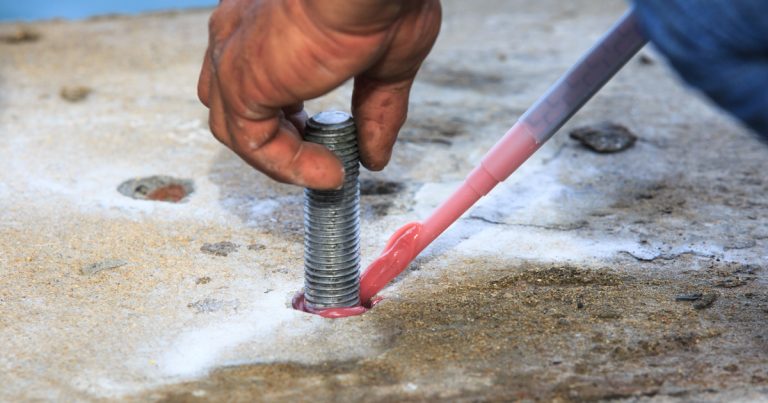
A chemical, or resin, anchor bonds a threaded stud or rebar to the substrate through adhesive. In capsule systems, a glass ampoule of resin and hardener sits in the hole; spinning in the stud crushes it, mixes the contents and surrounds the threads. In injection systems, resin is pumped into the clean hole before the stud goes in; once cured, it grips the bar over its full embedded length.
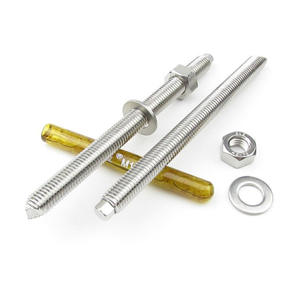
Because strength comes from adhesion along the bonded length rather than sideways compression, resin anchors depend less on pressure around the hole. That is why they are preferred for cracked concrete, close edges, tight spacing, thinner or weaker substrate, and dynamic or seismic loading. The trade-off is process discipline: clean the hole of dust, set the resin within its working window, and leave the assembly undisturbed for the product’s cure time; temperature and moisture limits follow the data sheet and ETA.
Expansion vs Resin Chemical Anchors: Side-by-Side Comparison
| Criteria | Expansion / Mechanical Anchor | Resin Chemical Anchor |
|---|---|---|
| Holding principle | Wedged sleeve friction and bearing pressure | Cured resin bond along the stud embedment |
| Best substrate | Solid, non-cracked concrete | Approved cracked and non-cracked concrete; weaker substrates |
| Cracked concrete | Needs intact concrete; less tolerant | Preferred with ETA cracked-concrete approval |
| Edge and spacing | Clear edge and spacing required | Close edges and tight spacing tolerated |
| Dynamic / seismic | Static loads; verify cases on data sheet | Dynamic and seismic when ETA-approved |
| Installation | Drill, clean, torque; load immediately | Clean hole, insert, cure before loading |
| Cure / temperature | None; torque only | Cure time and temperature range required |
| Typical uses | Rails, brackets, signs, static fixtures | Supports, base plates, rebar, edge fixings |
| Relative cost | Lower per point; fast | Higher per point; avoids substrate damage |
How to Choose: When to Use Each
Choose an expansion anchor when the substrate is solid non-cracked concrete, there is adequate edge distance and spacing, the load is largely static, and speed and low cost matter. Rails, signage and lightweight brackets into good concrete are typical expansion applications; confirm type, torque and load from the data sheet or ETA.
Choose a resin chemical anchor when the concrete may be cracked, the fixing sits near an edge or close to other anchors, the substrate is thin or weaker, the load is dynamic or seismic, or a large stud needs long embedment. Our overview of curtain-wall fixing anchors shows where each family appears on a facade.
Compare mechanical and resin anchors in our bolts, anchors & brackets collection, and match the family to the actual substrate, edge distance and load case rather than defaulting to whichever box is on the van.
Installation Conditions That Change the Answer
A correct anchor fails when conditions are ignored. For expansion fixes, an oversized hole or trapped debris reduces the sleeve’s grip. For chemical fixes, a dusty, oily or damp hole weakens the bond, resin outside its temperature range sets unpredictably, and disturbing the stud before cure breaks it. Diameter, depth, cleaning sequence and torque or cure values follow the supplier’s instructions and ETA report.
On facade projects, anchor selection ties into the supporting steelwork. The brackets and ear plates used on curtain walls transfer their reaction into whichever anchor the engineer specifies, so anchor, plate and bolt should be sized together from the project load case.
Expansion vs Chemical Anchor FAQ
Which is stronger, an expansion or a chemical anchor? Neither is universally stronger; it depends on the product, concrete condition, embedment depth and load case. Mechanical anchors hold well in solid non-cracked concrete; resin anchors hold along the bonded length, including cracked and edge situations. Use the manufacturer’s load values and ETA report.
Can chemical anchors be used in cracked concrete? Many ETA-approved resin anchors are assessed for cracked-concrete use, but not every product is. Check the approval scope on the data sheet; use outside approved conditions invalidates rated performance.
How long does a chemical anchor take to cure? Cure time varies by resin type, product and temperature and is given on the data sheet. Do not load the fixture until the specified cure period passes; cold temperatures extend it.
Do expansion anchors work near edges? Only when edge distance and spacing meet the supplier’s minimums. Expansion pressure needs intact concrete around the hole; close edges can split it, where resin anchors are safer.
Which is cheaper overall? Expansion anchors cost less per point and install faster with no waiting. Resin anchors cost more per point but can prevent failed fixings and re-drilling on difficult concrete, which often makes them cheaper there.
Unsure which family your fixing points need? Send the substrate condition, edge distances and load case to our team for a recommended anchor package — contact Trilonum for anchor selection and a quotation.
