


 Français
 Русский
 Español
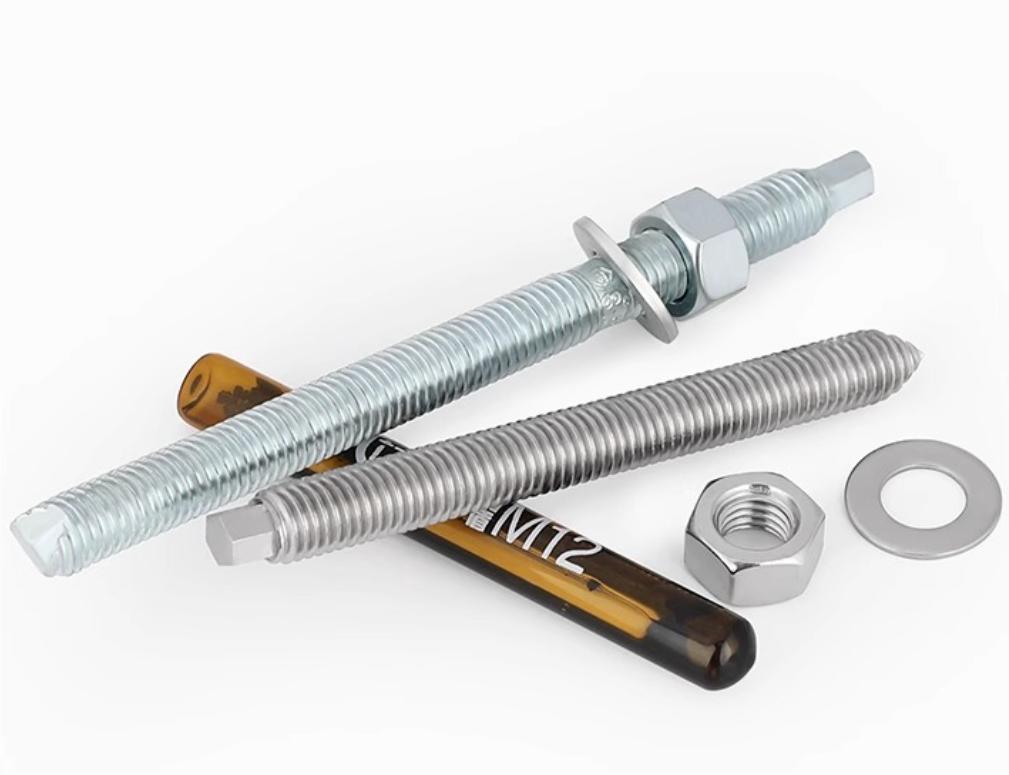
Curtain wall fixing anchors are the invisible connection between an elegant facade and the structure behind it. Choose the wrong anchor type, grade or embedment depth and the glazing system may pass inspection yet drift, leak or loosen under real wind cycles. This guide covers loads, substrate, anchor types, depth, grade and torque, so the fixing set is specified on evidence rather than habit.
Anchor selection begins on paper. Confirm the facade system, structural substrate and design load case before comparing products, because anchor family, diameter, embedment depth and grade follow from those facts. Our bolts, anchors and brackets range lists the stainless hardware used across curtain wall assemblies, and our overview of curtain wall fasteners and their selection explains how anchors sit alongside bolts and brackets in the schedule.
To structure the full specification rather than anchors alone, use our specifying facade hardware checklist, which groups load, grade, embedment depth and torque into one review list.
The Loads a Curtain Wall Anchor Must Carry
A facade anchor does not carry one static weight; it resists several load directions over the building’s life. Identify each case the engineer assigned to the point before opening a catalogue.
- Wind load (suction and pressure). Wind pushes the face and pulls outward on suction. Anchors resist both compression into the substrate and tension pull-out; repeated cycles make fatigue and loosening matter as much as peak force.
- Self-weight. Panels, framing, gaskets and insulation hang downward on every point. Gravity usually acts in shear or combined shear-and-tension, so anchor shear capacity and bracket interaction must both be checked.
- Seismic loads. In seismic zones the facade must drift with the structure without dislodging; anchors accommodate movement rather than locking glass rigidly to a flexing frame.
- Maintenance loads. Cleaning access, handrail forces and occasional contact add cases often underestimated in the schedule.
The engineer assigns a characteristic load to each position; the sheet confirms the anchor can resist it with the required margin. Never size an anchor from a typical building alone — use the load calculation and the supplier’s tested capacities.
Read the Substrate Before Choosing the Anchor
The same anchor that holds in solid concrete can fail in hollow block, and steel needs different fixing than masonry. Confirm the point on site: drawings often describe a slab while the real surface is a screed, a course of blockwork or a shallow edge beam.
- Solid concrete. Dense and homogeneous; both expansion and chemical anchors perform well here, provided embedment and spacing meet the sheet.
- Masonry and blockwork. Solid brick, dense block and hollow block behave differently. Hollow or aerated units demand specialist masonry fixings; generic anchors can split units or spin loose in voids. Verify unit type on site.
- Steel structure. Where brackets bolt to steel framing, concrete anchors are irrelevant; use through-bolts, tapped holes or welding per the detail. Our guide to brackets and ear plates for curtain walls shows how these connections transfer load.
Expansion Anchors vs Chemical Anchors: When to Use Each
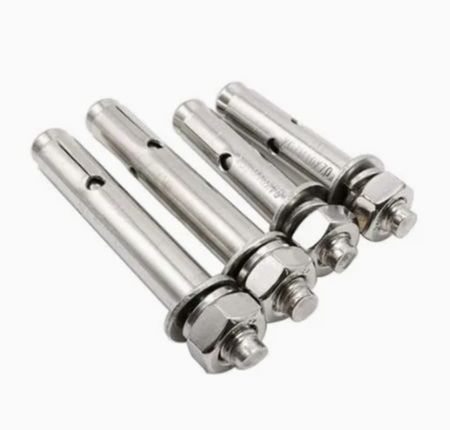
The two families work by different physics. Expansion anchors grip mechanically when the sleeve or wedge expands against the hole; chemical anchors bond the stud to concrete with resin. Both are valid, but fit different situations.
Where embedment is chosen before the pour rather than drilled after, our guide on how to install cast-in channels walks through positioning and fitting the receiver.
Beyond the anchor itself, the threaded member that ties the fixture to the anchor is covered in our threaded rod vs stud for curtain walls selection guide.
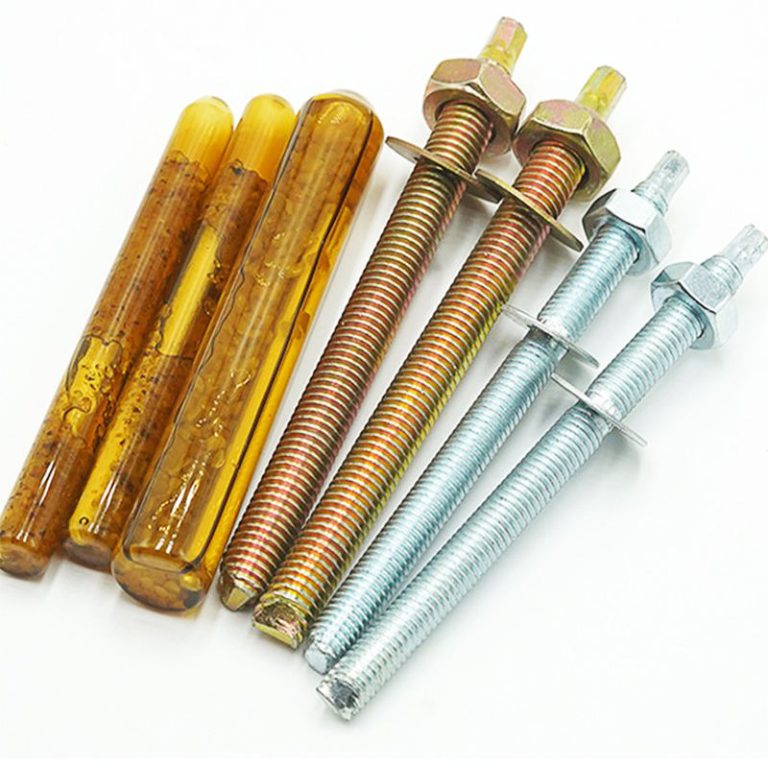
| Criteria | Expansion / mechanical anchor | Chemical (resin) anchor |
|---|---|---|
| Principle | Sleeve or wedge expands against the hole under torque | Resin bonds the stud to the bore at full depth |
| Best substrate | Solid concrete; selected masonry | Solid concrete; preferred for high tension and seismic |
| Edge and spacing | Wedging force near edges; clear distances required | Lower outward force; suits closer edges and spacing |
| Installation | Torque-sensitive; tightening sets the grip | Clean bore, insertion and cure time matter |
| Typical role | Moderate loads, standard brackets in concrete | Heavy tension, tall panels, seismic, edge points |
Rule of thumb: lean toward chemical anchors where load is dominated by tension, where points sit near edges or between rebar, or where seismic matters; use expansion anchors for straightforward concrete positions at moderate loads. Our article on expansion versus chemical curtain wall anchor bolts goes deeper into each family’s limits.
Embedment Depth, Spacing and Edge Distance
Anchors close together interact: each creates a local resistance cone in concrete, and overlapping cones reduce capacity. An anchor near a free edge can split the substrate instead of gripping. The sheet lists minimum effective embedment, spacing and edge distance for the stated capacity — respect these values.
On site, drill to the required depth, remove dust from the bore, and confirm the member has enough thickness behind the anchor — a back-edge too close invalidates the rating. When a layout forces anchors nearer an edge or neighbour than the sheet allows, redesign the bracket rather than accepting lower capacity.
Stainless Grade: 304 or 316
Corrosion degrades an anchor permanently, and a corroded stud cannot be re-tightened into a sound grip. 304 covers most inland, sheltered projects; 316 adds molybdenum for better chloride resistance and suits coastal facades, pool-adjacent buildings and aggressive air. Confirm grade with the supplier, and match anchor grade to bracket and bolt rather than pairing a premium anchor with a mild-steel washer.
For a full grade-by-environment reference, read our guide to stainless steel grades for facade fixings, which pairs 304 and 316 with coastal, inland and poolside exposure.
Torque, Data Sheets and Supplier Data
Correct installation turns an engineered anchor into a secure fixing; incorrect installation cancels the rating. Expansion anchors reach grip at the supplier’s specified torque, measured with a wrench, not feel: under-torquing leaves slack under suction, over-torquing can crack concrete or strip the sleeve. Chemical anchors need a clean bore, correct insertion speed and the stated cure time before loading.
Every capacity figure, torque, depth and edge distance here should be confirmed against the manufacturer’s certified sheet for the exact product supplied; values vary between products, substrates and conditions, and the engineer’s calculation governs the final choice.
Review the wider curtain wall systems overview to see how anchors, brackets and panels fit together before finalising the schedule.
Common Anchor Selection Mistakes to Avoid
- Choosing the anchor before confirming the substrate — guessing concrete at a hollow-block point.
- Using one anchor type for the whole facade instead of matching type to load and position.
- Ignoring edge distance and spacing while keeping the rated capacity on paper.
- Under-cleaning chemical holes or loading before cure time.
- Tightening expansion anchors by feel instead of the sheet torque.
- Specifying 304 on a coastal or exposed site where 316 is required.
Curtain Wall Fixing Anchors FAQ
Which anchor suits a concrete curtain wall bracket? Start from the engineer’s load case: moderate loads suit expansion anchors; high tension, seismic or edge-adjacent points suit chemical resin anchors. Confirm capacity against the supplier’s sheet.
Can expansion anchors be used in brick or blockwork? Only where the sheet lists that masonry type. Hollow or aerated units need specialist fixings; a generic anchor can split the unit or spin loose in a void.
304 or 316 stainless for exterior anchors? 304 suits most inland, sheltered projects; choose 316 for coastal, pool-adjacent, humid or aggressive environments. Verify grade with the supplier.
How deep should an anchor be set? At the effective embedment on the sheet for that product and load. Deeper is not automatically better near edges; shallower embedment reduces capacity.
What torque should an expansion anchor receive? The value on the sheet for its diameter, applied with a torque wrench. Never estimate by feel; under- and over-torquing both fail.
Preparing a fixing schedule? Contact Trilonum with your drawings and load points; we will match anchors, brackets and grade to substrate and environment.
For jobs calling for embedment rather than post-installed bolts, see our selection guide to cast-in anchor channels for curtain walls.
