


 Français
 Русский
 Español
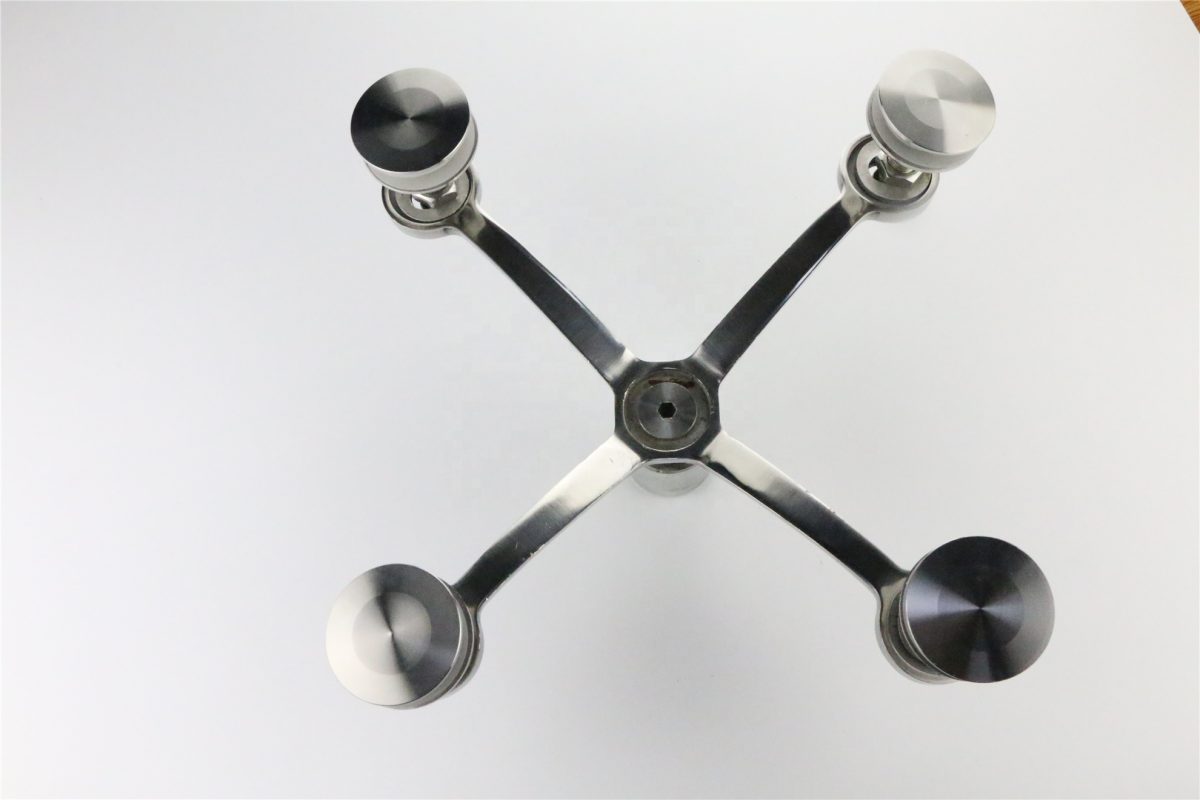
A reliable facade hardware specification checklist keeps every fixing — anchors, bolts, brackets, point-supported components, cast-in channels and balustrade hardware — consistent from design review to handover. Skipping one item usually surfaces as rework: an anchor where a channel was meant, a lower-grade fitting at the coast, or missing spare spiders when a panel is damaged. This checklist lists what contractors, buyers and engineers must confirm before release.
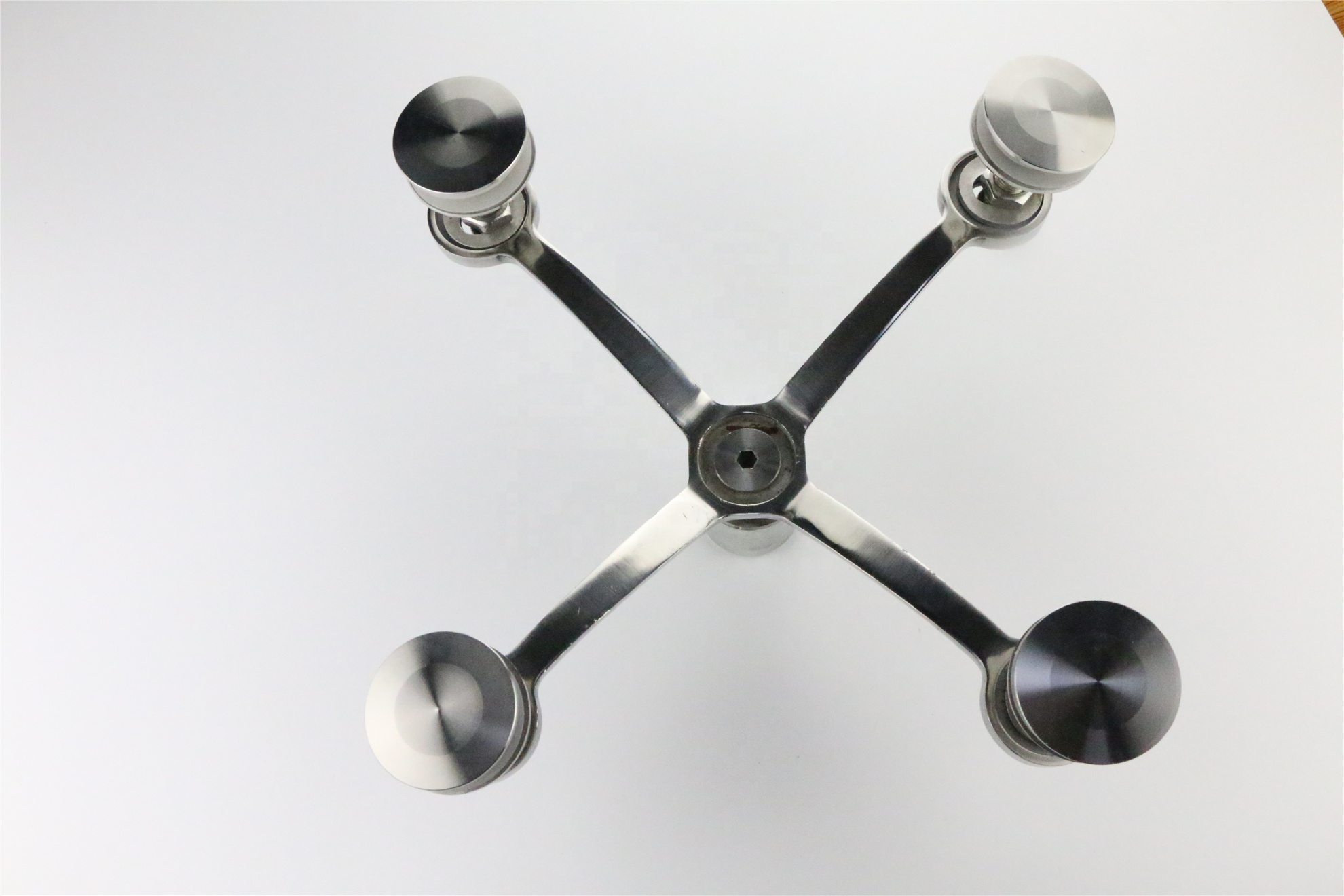
The hardware on a facade does more than hold glass to the frame. Anchors and brackets transfer dead load, wind pressure and seismic forces into the structure; point fixings clamp panels at discrete points; cast-in channels offer adjustable connections in concrete; balustrade hardware carries barrier loads on stairs and balconies. Whether you source point-supported systems, railing hardware or anchors, check each line item against the engineering package, not a catalog photo.
1. Design Drawings and Performance Requirements
Start with documents, not samples; an outdated issue is the most common order error.
- Match revisions. Latest approved structural drawings, elevations, sections and fixing schedules; issue and revision must agree across architect, engineer and supplier.
- Confirm load cases. Cladding dead weight, wind pressure, seismic movement and live barrier load; each fixing group’s capacity covers the governing case using supplier data.
- Allow movement. Note drift, thermal expansion and seismic sliding; use slotted holes and adjustable brackets that move without binding.
- Cross-check trades. Mark anchors colliding with MEP, openings, reinforcement or prestressed strands; an edge hole often fails inspection.
- Identify substrate. Concrete, precast, steel, masonry and timber each need a different anchor rated for that substrate.
2. Material Grade, Finish and Corrosion Protection
Material follows the site environment, not the cheapest quote; an inland grade can fail at the coast within years.
- Match stainless grade. 304 covers most inland projects; 316 is safer for coastal, pool, industrial and chemically aggressive atmospheres.
- Protect carbon steel. Confirm galvanizing class or coating system against the exposure category; bare steel edges should not show on exterior faces.
- Separate dissimilar metals. Where steel meets aluminum framing, add isolator gaskets or washers to prevent galvanic corrosion.
- Keep grade consistent. Washers, spacers and bolts must match the main fitting; a cheaper substitute fastener becomes the corrosion point.
- Lock the finish. State brushed, satin or mirror polish; fittings visible from the street must read uniformly.
3. Dimensions, Tolerances and Drawing Cross-Check
Dimensional errors are costly after fabrication; compare geometry against shop drawings before production.
- Check dimensions, hole positions, thread sizes and projection of each bracket or spider against connection drawings; record the adjustment range.
- For point fixings, confirm glass edge distance, hole diameter and gasket dimensions; tolerances follow supplier data and the engineer’s criteria.
- Verify cast-in channel slot width, T-bolt size and embed depth against the future bracket connection.
- For railing runs, cross-check post spacing, base plate size, spigot or standoff diameter and clamp opening against panel thickness.
- Flag architectural-versus-structural mismatches before ordering; on-site fixes mean avoidable rework.
4. Standards, Certification and Documentation
Certification paperwork protects both contractor and owner; missing documents frequently delay handover.
- Request material certificates for delivered batches; check grade, heat number and finish against the purchase order.
- Confirm market-required documents, such as ETA evaluation for fixings where applicable, plus load test reports; generic “compliant” claims need paperwork.
- Obtain inspection certificates for critical lots and the supplier’s quality procedure.
- Align documents with what the approval authority expects; missing certificates at sign-off commonly stall practical completion.
Assembling the schedule? Browse our bolts, anchors and brackets range for curtain wall and point-supported facades, and send us drawings for a reviewed list sized to the load case.
5. Supplier Qualification, Capacity and Lead Time
A catalog is not a factory; qualify the supplier before committing volume, especially for long-lead embed items.
- Confirm production capacity for the required quantity and lead time; ask which parts are in-house versus subcontracted.
- Request similar-scale references and samples of the actual grade and finish before bulk production.
- Align lead time with erection: channels must arrive before the pour; exposed fittings follow cladding sequencing.
- Clarify who supplies gaskets, isolators, spare fasteners and instructions; do not assume they are included.
6. Quantity Take-Off and Spare Allowance
Count from the fixing schedule, not facade area; small consumables are most often under-ordered.
- Count fixings per panel and per floor from the schedule, including every washer, bolt, spacer, gasket and cover cap.
- Add a small spare allowance per line item for damage, lost fixings and maintenance; confirm the percentage with the engineer.
- Separate site-adjustment extras — shims, slotted bolts, packing pieces — from permanent hardware on the packing list.
- Reconcile channel lengths with pour sections; leftovers cannot always be joined at a pour boundary.
7. Packaging, Sea-Freight Protection and Inbound Inspection
Sea-freight hardware can arrive rusted if packed for trucks; protect the finish and inspect on arrival.
- Specify ocean-freight packaging: moisture-barrier wrapping, vapor-corrosion inhibitor, finish segregation, cartons labeled by floor or zone.
- Mark each box with part number, grade, finish and zone; keep spare stock separate from bulk so it is not consumed on site.
- On delivery, inspect for rust, dents, thread damage and coating scratches before signing; photograph and claim inside the supplier’s window.
- Store hardware indoors off the floor; keep stainless separated from carbon steel to avoid cross-contamination.
8. Installation, Torque and As-Built Records
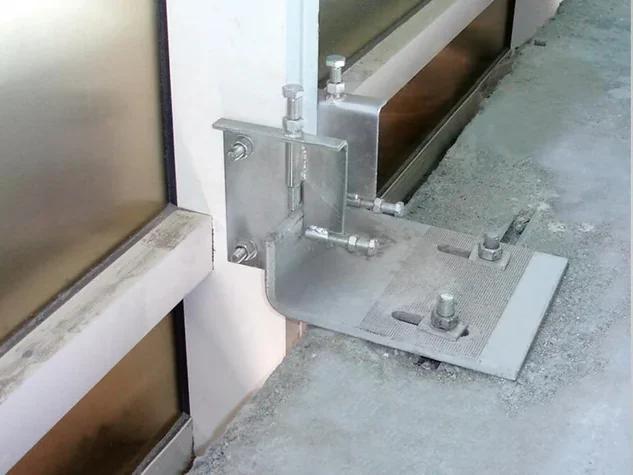
The schedule ends on site, and the record file closes the loop. For what the anchor layer should contain, see our overview of curtain wall fixing anchors.
- Require written instructions with torque values; use a calibrated wrench and never tighten by feel.
- Record anchor set-out, drill depth, adhesive mixing and curing time for chemical anchors; keep torque sheets per fixing group.
- Leave shims and gaskets in place after alignment; removing spacers later defeats the tolerance design.
- Compile as-built records: schedule used, certificates, torque logs, inspection photos and engineer-approved substitutions.
- Walk connections with the inspector before cladding covers them; sealed missed fixings are costly to reach.
Facade Hardware Specification Checklist FAQ
What documents must I collect before ordering facade hardware? Gather the latest approved drawing revision, load-case schedule, material certificates, ETA or market test documents where applicable, packing list and torque instructions; these avoid most short-shipment and certification problems.
Should I specify 304 or 316 stainless steel? 304 suits most inland projects; 316 is safer for coastal, pool and aggressive environments. Confirm grade with the supplier for the actual site.
How much spare hardware should I order? Keep a small per-line allowance for damaged panels, lost fixings and maintenance, confirmed with the engineer; spares should not double the order.
Do cast-in channels need special delivery planning? Yes. Channels must arrive before the pour, so lead time is critical, and lengths should match pour sections because leftovers are not always joinable.
Is tightening by feel acceptable for facade fixings? No. Use supplier torque values with a calibrated wrench and record every group; over-torquing cracks glass, under-torquing leaves a loose connection.
What most often delays project handover? Missing certificates and incomplete torque records; both are cheap to prepare during order and install but hard to reconstruct after sealing.
Ready to specify? Send approved drawings and load-case notes, and we will prepare a reviewed schedule covering anchors, brackets, point fixings, channels and railing parts — contact Trilonum for a quotation.
