


 Français
 Русский
 Español
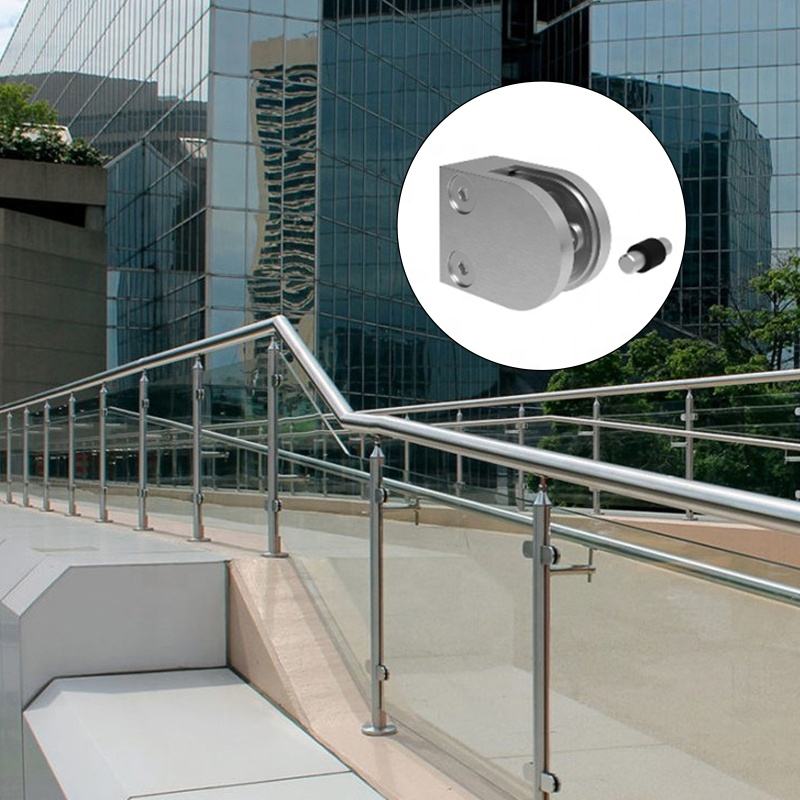
Glass railing clamps are the stainless steel fittings that hold glass panels in frameless balustrades, stair railings, and balcony fences. The clamp style you choose determines how the glass is supported, how it looks, and how much load the railing can carry. Picking the wrong type means a railing that either looks wrong or does not meet the required strength.
This guide breaks down the main types of glass railing clamps, what each is used for, and how to choose the right one for your project.
The Main Types of Glass Railing Clamps
H-Type Clamps
An H-type clamp holds the edge of a glass panel between two plates in a shape that resembles the letter H. It is used to connect two glass panels edge-to-edge at a corner or in a straight run. The H profile grips both panels, providing a clean, semi-frameless look while distributing the load along the glass edge.
U-Type Clamps
A U-shaped clamp cradles the glass within its open U profile, holding the glass at a right angle or securing its edge. U clamps are commonly used where a glass panel meets a wall, a post, or the floor channel, and where the clamp is hidden or sits flush. They are well suited to corner supports and edge fixation in balustrades and glass partitions.
Round-Base (Spigot) Clamps
Round-base clamps — often called spigots or standoff clamps — grip the glass at a drilled hole near the panel edge, holding it clear of the substrate. They give the lightest, most open appearance because the glass appears to float above the floor or base. Spigot systems are popular for glass pool fences, balconies, and stair glass, and each spigot carries a rated load based on the glass thickness and fixing.
Through-Fixing vs Surface-Fixing
Beyond shape, clamps also differ in how they mount: through-fixing clamps bolt through the glass panel (used with spigots and some point-fix hardware), while surface-fixing clamps grip the glass edge or face without drilling. Through-fixing offers higher load capacity; surface-fixing avoids drilling the glass and suits thinner panels or heritage glazing.
Comparison at a Glance
| Clamp Type | Best For | Appearance | Load |
|---|---|---|---|
| H-Type | Connecting two panels edge-to-edge | Semi-frameless, clean | Edge load distribution |
| U-Type | Corner support, edge fixation | Flush / hidden | Medium |
| Round-Base (Spigot) | Pool fences, balconies, floating glass | Openest, glass appears to float | Rated per spigot |
| Through-Fixing | High-load point-fix systems | Minimal hardware on glass | Highest |
How to Choose the Right Glass Railing Clamp
- Match glass thickness — confirm the clamp’s gripping range covers your panel thickness (commonly 8–12 mm, sometimes 10–12 mm). A clamp that is too loose or too tight will not hold securely.
- Consider the application — pool fences and coastal railings need 316 stainless and corrosion resistance; interior balustrades can often use 304.
- Think about the look — spigots give the most open view; U and H clamps give a more structured, semi-frameless look.
- Check the load requirement — balustrade height and local codes set the strength; through-fixing carries more load than surface fixing.
- Choose finish — satin, mirror, or PVD-coated finishes change both appearance and durability.
Frequently Asked Questions
What is the difference between H and U type glass clamps?
An H-type clamp grips two panels edge-to-edge to join them, while a U-type clamp cradles a single panel edge for corner or flush fixation. Use H to connect panels, U to fix a panel to a wall, post, or base.
Are spigot clamps strong enough for balustrades?
Yes, when correctly sized and installed. Each spigot has a rated load based on glass thickness and fixing; engineering checks the spacing and load case. They are standard for pool fences and balcony glass.
What glass thickness do railing clamps accept?
Most accept 8–12 mm tempered glass; some systems go up to 12 mm or higher. Always confirm the clamp range against your specified glass before ordering.
Choose Clamps That Fit Your Railing System
Once you have selected the right clamp type, our glass railing handrail installation guide covers the brackets, standoffs, and spacers used to fix the handrail above the glass.
Trilonum supplies stainless steel glass clamps and railing and balustrade hardware in 304 and 316. Whether you are building a pool fence, a balcony, or a stair balustrade, hardware choice affects both your project cost and its long-term safety. Contact us for load-rated clamps for your specification.
Contractors comparing frameless railing systems will find a full breakdown in our U-channel vs clamp comparison for frameless glass railings.
