

 Français
 Русский
 Español
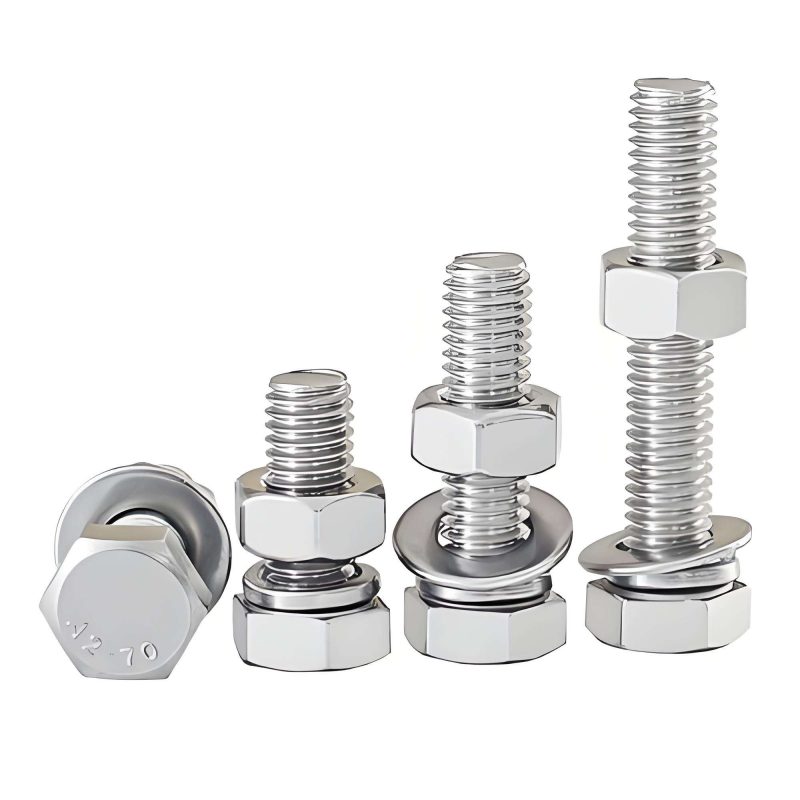
Stainless steel grades facade fixings start with one practical choice: 304 or 316. Choosing it decides whether a fixing set lasts maintenance-free or begins corroding within a few seasons. Bolts, anchors, brackets and spider fittings face weather every day, and the 304 vs 316 difference comes down to chloride resistance, appearance and replacement cost. This guide compares the two grades for contractors and engineers.
In short: 304 covers most inland and sheltered projects, while 316 adds molybdenum to resist chloride corrosion and is standard near the sea, around pools and in aggressive settings. Browse our bolts, anchors & brackets range, and read our curtain wall fixing anchors guide to see how the anchor choice fits this specification.
Why the Grade of Facade Fixing Matters
Stainless steel resists rust through a thin, chromium-rich passive oxide film that self-repairs when scratched, but it only holds up under the conditions the alloy was designed for. Ordinary humidity and urban air are handled comfortably; salt spray, de-icing salts, pool water and industrial fumes break it down faster, and pitting in a concealed fixing stays invisible until the joint loosens. Fixings carry load, sit hidden behind panels and are hard to replace, so specifying the grade now beats swapping corroded fixings years into the warranty.
304 vs 316: What Separates the Two Grades
Both 304 and 316 are austenitic chromium-nickel stainless steels available in standard fastener strength classes. The difference is alloy chemistry: 316 adds molybdenum, strengthening the passive film against chloride ions, so it resists pitting and crevice corrosion where 304 would fail. Exact composition percentages appear in the material standards; confirm them against the supplier’s certificate.
304 is the general-purpose baseline for interiors, sheltered inland facades and dry urban environments away from salt. 316 is the upgraded grade for chlorides and sites that cannot be guaranteed clean and dry for decades.
| Criteria | Stainless 304 | Stainless 316 |
|---|---|---|
| Alloy difference | Chromium-nickel austenitic grade | Adds molybdenum for stronger chloride resistance |
| Atmospheric corrosion | Good for inland, dry, sheltered conditions | Good everywhere 304 works, plus aggressive settings |
| Chloride / salt exposure | Limited; susceptible to pitting and crevice corrosion | Significantly more resistant to chloride attack |
| Fastener family | A2 (e.g. A2-70) | A4 (e.g. A4-70, A4-80) |
| Appearance / finish | Satin or polished; visually similar to 316 | Same finishes; looks almost identical on site |
| Cost position | Lower unit cost, widely stocked | Typically more expensive due to added alloy |
| Common sites | Inland facades, interiors, sheltered areas | Coastal buildings, pools, industrial zones |
Matching the Grade to the Site Environment
Environment, not aesthetics, drives the decision; map the actual exposure of each fixing before choosing:
Keep grade choice inside a broader spec pass; our specifying facade hardware checklist pairs grade with load, finish and documentation requirements.
- Inland, dry or sheltered locations: city offices far from coastlines, covered atriums and interior partitions usually perform well in 304.
- Coastal and sea-spray zones: buildings within the ocean’s salt-air reach should generally use 316, even where the facade looks sheltered; salt-laden wind travels inland and settles on fixings.
- Swimming pools and wet rooms: chloride-based pool water and condensation demand 316; our notes on pool glass fence hardware standards show how corrosive that setting is.
- Industrial, de-icing and concealed sites: chemical fumes, road-salt spray and buried brackets are easier to over-specify in 316 than inspect later.
Strength Classes: A2-70, A4-70 and A4-80
On fasteners, the grade letter and strength suffix are two separate questions. The letter family states the corrosion group: A2 is the 304 family, A4 the 316 family. The suffix denotes strength class, a higher number meaning higher tensile strength; A2-70 and A4-70 are the common classes, A4-80 where stronger fasteners are needed in the 316 family.
Do not confuse corrosion grade with mechanical strength: A4-70 in 316 is not automatically stronger than A2-70 in 304; the upgrade is corrosion resistance, not load capacity. The engineer’s calculation sizes diameter, thread and strength class, while the environment sets the A2 or A4 family; exact values come from the supplier’s data.
Surface Finish and Appearance
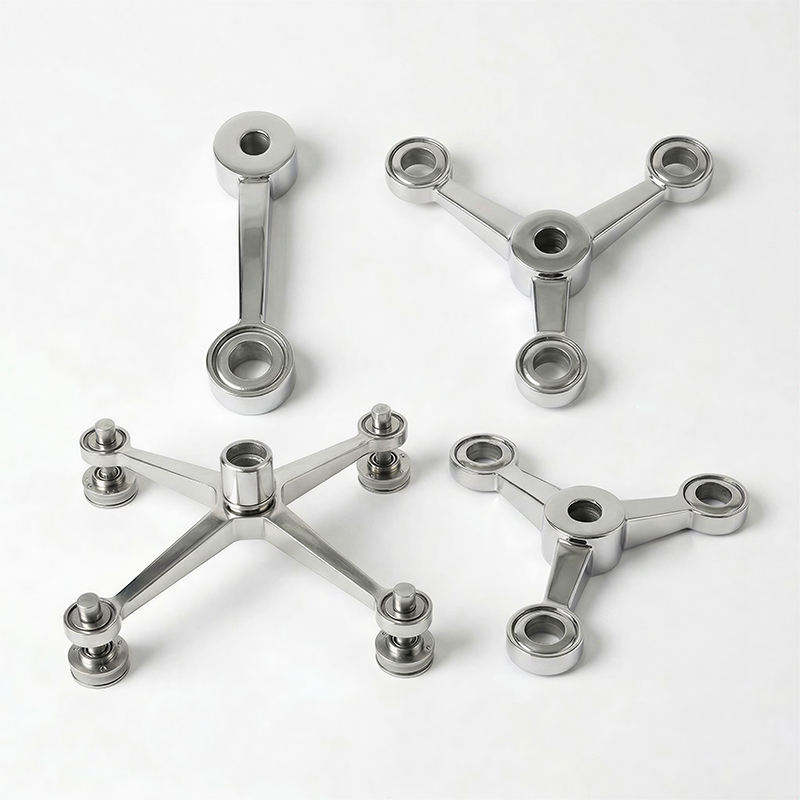
Finished in satin or mirror polish, 304 and 316 look nearly identical, so appearance cannot tell them apart on site. Visible hardware — spiders, clamps, brackets — is polished or brushed to match the design, while concealed fixings keep the plain finish. Record the finish alongside the grade: it never substitutes for corrosion resistance, and polished 304 still pits in chloride.
Cost: When the 316 Premium Is Worth Paying
316 typically costs more per unit than 304 because of the added molybdenum, and the gap shows across large bolt and anchor quantities. Inland projects where 304 suits the exposure stay with 304; upgrading the whole set there adds cost without measurable gain. The rational split is selective: 316 for salt, pool chemistry, industrial atmosphere or long-term damp, 304 for sheltered and interior components. Price both schedules before tender.
Procurement: Markings, Certificates and Verification
Grade claims on a catalogue page are not proof. On delivery, check head markings and documentation rather than the box label:
- Head stamping: fasteners carry the grade marking on the head — A2 for 304, A4 for 316 — alongside the strength class; match it to the purchase order.
- Material certificates: request a mill or material certificate for critical fixings, confirming the alloy family against the material standard.
- Consistency: bolts, nuts, washers, spiders and brackets should all match the specified grade; mixing A2 nuts with A4 bolts defeats the specification, and certificates are kept on file.
Anchor selection belongs to the next layer: our comparison of expansion vs chemical anchors explains when each is set; confirm the grade whichever route the engineer selects.
When 316 Is Non-Negotiable
- Any facade within coastal sea-spray reach, including ground-floor cladding and exposed roof hardware.
- Fixings around swimming pools, water features, spas and salt-treated leisure spaces.
- Structures exposed to de-icing salts, traffic spray or industrial chemical atmosphere.
- Concealed fixings with a long design life where replacement access is poor, and projects specifying marine-grade hardware regardless of current conditions.
Stainless Steel Grades for Facade Fixings FAQ
Is 316 always better than 304 for facade fixings? Only where corrosion exposure justifies it. 316 resists chloride attack better, but inland sheltered projects perform well in 304, and the 316 premium adds cost without benefit there.
What does A4-80 mean compared with A4-70? Both belong to the 316 (A4) family; the suffix is the strength class, 80 being higher than 70. Choose the class the engineer’s load calculation specifies — higher strength is not better corrosion protection.
Can I use 304 inside and 316 outside on the same facade? Yes, this selective approach is common: 316 for exposed and coastal components, 304 for sheltered and interior fixings, provided each component is marked on the schedule.
How do I tell 304 and 316 apart on site? They look the same polished. Identify them by head stamping, certificates and supplier documentation; visual inspection cannot spot a difference that does not exist.
What should I ask the supplier for? Confirm the A2 or A4 family, strength class and finish, request a material certificate for critical fixings, and share the site exposure so the grade matches the environment.
Specifying 304 or 316 against your drawings? Send the elevation schedule and site location, and we will quote bolts, anchors, brackets and spiders in the grade that matches the exposure — contact Trilonum for a grade-matched quotation.
